
Products / Quercetagetin
High-purity Quercetagetin
Quercetagetin over 90% purity / Reduced plant-specific bitterness and astringency (off-flavors) / Sustainable ingredient development creating multiple materials from a single source / Derived from marigold (Tagetes) flower
Product & Material Overview
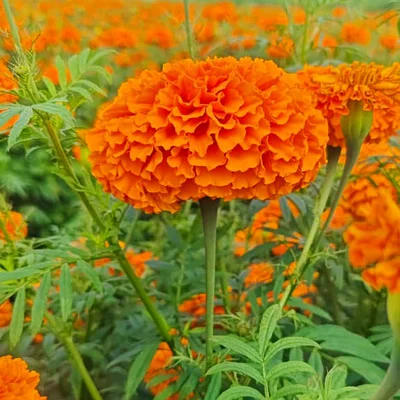
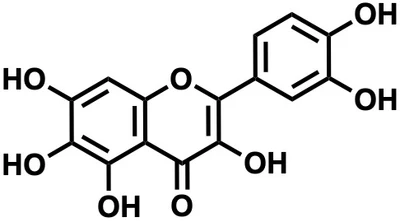
Quercetagetin (6-hydroxyquercetin) is a flavonol found in the flowers of the marigold (Tagetes erecta) . It has a hexahydroxyflavone skeleton with one hydroxyl group added to the 6th position of quercetin, and previous basic research has reported a variety of physiological activities, including antioxidant effects, anti-inflammatory effects, involvement in carbohydrate and lipid metabolism, effects on cellular signaling such as JNK1 and PI3-K, and tyrosinase inhibitory activity. Our quercetagetin achieves a purity of over 90% through our unique purification technology, while also reducing the bitterness and astringency (off-flavors) characteristic of plant-derived products. This makes it possible to incorporate it into a wide range of applications and dosage forms, such as beverages, foods, supplements, and cosmetics. Marigolds are widely used as a source of lutein and zeaxanthin, which are well known as eye care ingredients . In addition to these carotenoids, we are also focusing on quercetagetin as a new ingredient, aiming to create new value for marigolds.
Technical Advantages
- High-quality material achieving over 90% purity.
Our unique refining technology ensures a stable supply of quercetagetin with a purity of over 90%. This reduces the bitterness and astringency (off-flavors) characteristic of plant-derived ingredients, contributing to greater flexibility in product design.
- Sustainable material development that creates multiple materials from the same raw material.
The technology that allows for the extraction and isolation of lutein, zeaxanthin, and even quercetagetin from marigold flowers represents an innovative approach that maximizes the value of raw materials. By utilizing components that were previously unused, it also contributes to the sustainable use of raw materials.
Functional Efficacy Evidence
- Antioxidant effect
Quercetagetin has been shown to efficiently scavenge reactive oxygen species (ROS) and free radicals, suppressing oxidative damage to cell membrane lipids, proteins, and DNA. In particular, it is characterized by its high electron-donating activity among polyphenols and its excellent ability to reduce oxidative stress [1][2].
- Hyperdiabetic effect/antilipidemic effect
Quercetagetin has also been reported to have beneficial effects on the metabolic system. It has been shown to inhibit the activity of carbohydrate-degrading enzymes (such as α-glucosidase), potentially slowing the rapid rise in postprandial blood glucose. There are also reports of its involvement in promoting glucose uptake in hepatocytes and improving insulin sensitivity. By suppressing lipid oxidation, it has been shown to contribute to the suppression of LDL oxidation and the accumulation of triglycerides. These effects make it a promising component for supporting the prevention and improvement of dyslipidemia [1][2].
- Anti-Inflammatory
Quercetagetin has been shown to suppress the activation of NF‑κB, a key signaling pathway that drives inflammatory responses, thereby reducing the excessive production of pro‑inflammatory cytokines. Owing to its strong antioxidant capacity, quercetagetin also mitigates ROS‑induced cellular stress, suggesting a potential “dual protective mechanism” that helps prevent the onset of chronic inflammation [2][3].
- Tyrosinase inhibitory effect
Tyrosinase is a key enzyme in melanin production, and ingredients that inhibit it are attracting attention in the field of cosmetics, with quercetagetin also showing this effect. Quercetagetin has been reported to inhibit tyrosinase activity and suppress the "tyrosine → dopa → dopaquinone" reaction, which is the starting point of melanin production. Due to its structure with many hydroxyl groups, quercetagetin is thought to readily bind to the active site of the enzyme and have a high effect in suppressing melanin production [4].
- Safety testing
Safety assessments of quercetagetin, including repeated-dose toxicity studies and genotoxicity studies, have been conducted, and no serious toxicity has been observed at doses equivalent to normal intake levels [5].
- References
[1] Wang W. et al. (2016). Journal of Food Science and Technology, 53(6), 2614–2624. [2] Zhang H. et al. (2025). Phytochemistry Reviews, 24, 3887–3913. [3] Baek S. et al. (2013). Journal of Molecular Biology, 425(2), 411–423. [4] Liang F. (2024). Frontiers in Chemistry, 12, 1411801. [5] Subrahmanya A. et al. (2026). International Journal of Toxicology.
Potential Application Fields
- Functional foods and supplements
Applications to products focusing on antioxidants and sugar/lipid metabolism, as well as functional foods aimed at maintaining health.
- Cosmetics and personal care
In addition to inhibiting tyrosinase, it also reduces the stimuli that promote melanin production by suppressing oxidative stress, making it promising for anti-aging care through a dual approach. Furthermore, its antioxidant and anti-inflammatory effects suggest potential applications across a wide range of product categories.
Gallery

Material Information
Composition: Quercetagetin content: NLT 90% Source Material: Marigold (Tagetes erecta) flower
Disclaimer
This document is based on general scientific knowledge and research reports regarding raw materials and does not guarantee the efficacy or effects of any specific product. The information provided is not intended for the diagnosis, treatment, or prevention of disease, nor does it indicate any medicinal effects. The research data and functional information presented are academic knowledge regarding raw materials or components and do not indicate that similar effects will be obtained in the final product. Research results were obtained under specific conditions, and results may vary depending on the amount used, formulation, and usage environment. In accordance with relevant laws and regulations such as the Pharmaceuticals and Medical Devices Act, the Premiums and Representations Act, and the Health Promotion Act, we avoid expressions that suggest medicinal effects. If you use the contents of this document in product advertising or promotional materials , please check the relevant laws and regulations and ensure appropriate labeling and advertising practices. We are not responsible for any product labeling or advertising expressions based on the contents of this document